
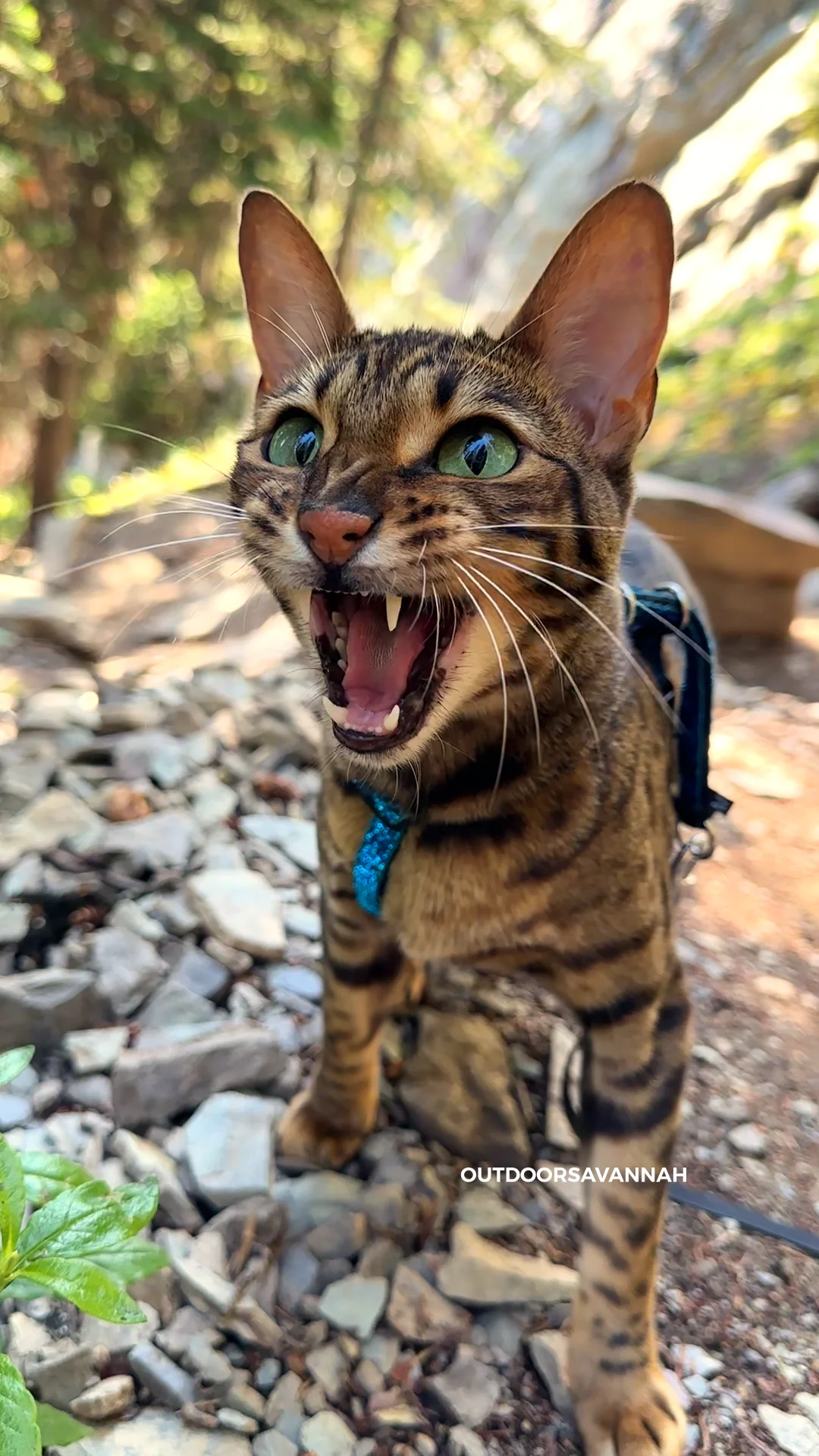
My favorite theory for why cats chirp at birds and other animals is that they are attempting to imitate the sounds of their perceived prey.
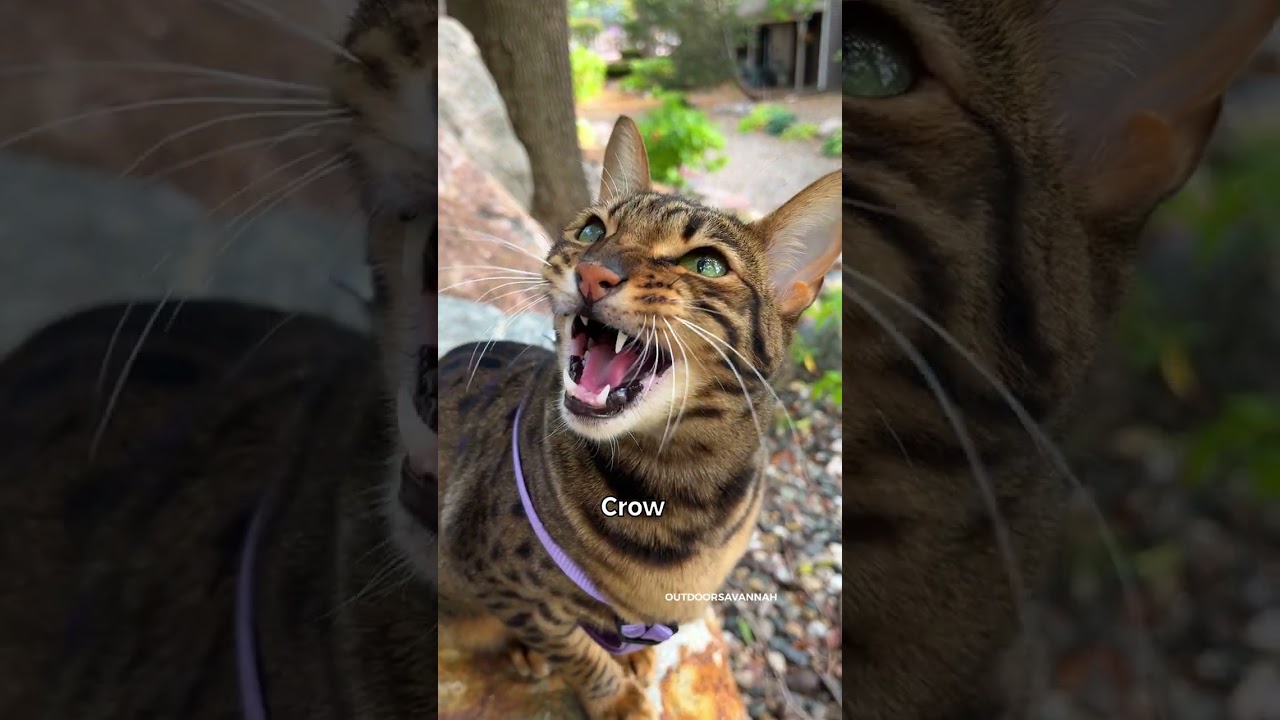
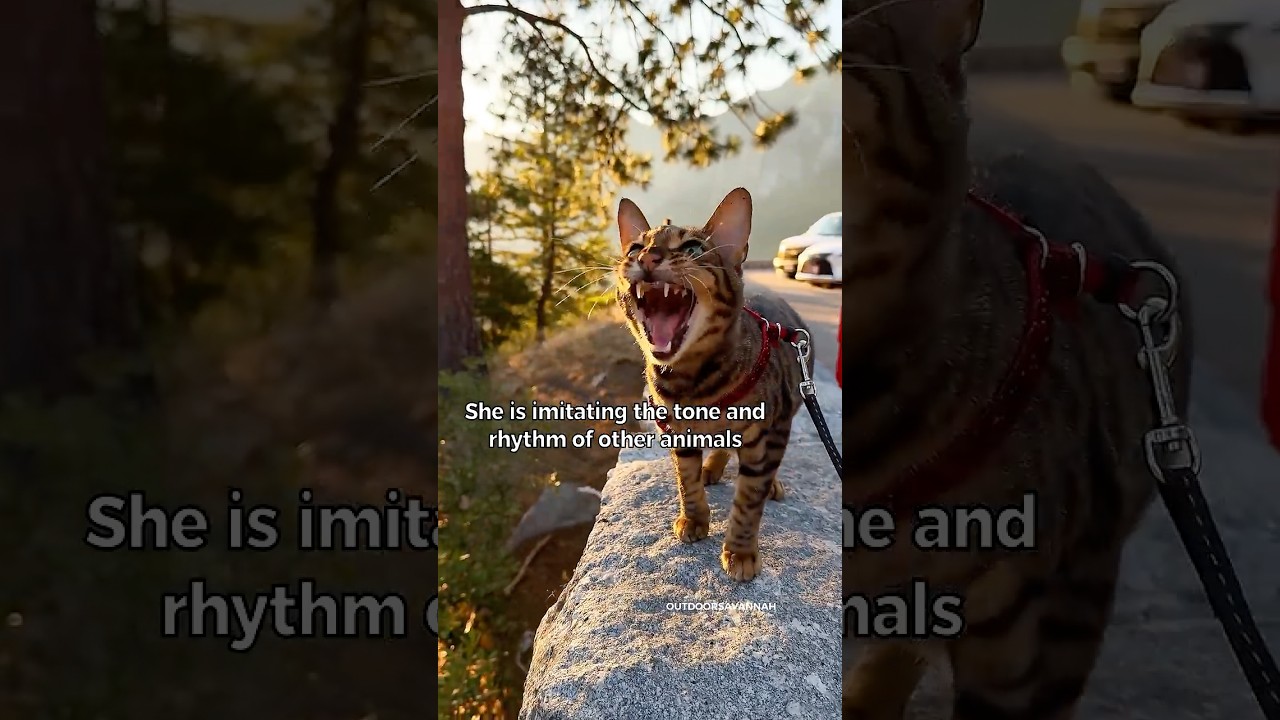
The following are video compilations of Raja’s vocal responses to animals across North America. Throughout these recordings, Raja produces a range of chirps, chatters, and trills in reaction to external stimuli.
What Triggers Cat Chirping?
Cat chirping behavior typically occurs in response to a stimulus that is visual, audible, or both. Common triggers include birds, insects such as flies, and laser pointers. These vocalizations are understood to be instinctual and part of a prey-response behavior.
Observed Vocal Similarities
While I am not a scientist, I have observed similarities between Raja’s vocalizations and the sounds produced by the animals she is responding to. These similarities appear across three main dimensions:
1. Volume
Differences in the volume of Raja’s sounds often seem to correspond to the perceived loudness of the other animal. This is particularly noticeable indoors, where birds outside a glass window sound quieter; Raja’s vocalizations in these cases tend to be softer, as if matching the received volume rather than the actual source volume.
2. Rhythm
The duration and frequency of Raja’s sounds often appear to be similar to those of the animal she is observing. This suggests a form of rhythmic imitation in which the length and repetition of her sounds align with the cadence of the external stimulus.
3. Inflection
Raja’s vocal inflections frequently appear to mirror aspects of the other animal’s sound. Inflections are a combination of pitch, tone and loudness.
A Potential Case Study Approach
A formal case study could analyze this phenomenon by graphing audio waveforms of Raja’s vocalizations alongside those of the animals she is responding to. Comparing these waveforms may reveal measurable similarities in frequency, amplitude, rhythm, or pitch, and could help determine whether a statistical mean of similarity exists.
While this hypothesis remains observational, the recurring patterns suggest that cat chirping may include an element of acoustic mimicry as part of the predatory response.